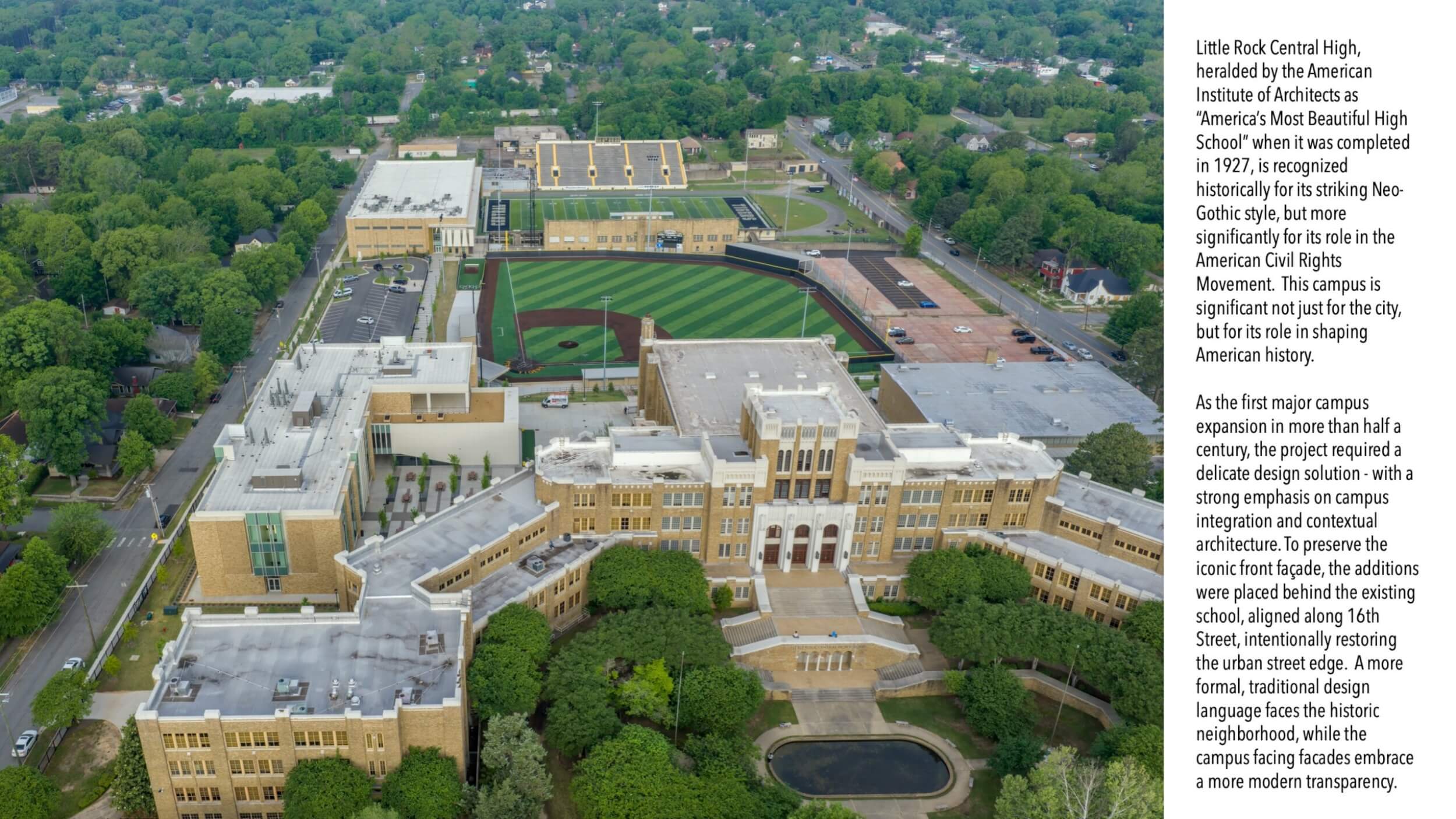
Little Rock Central High, heralded by the American Institute of Architects as “America’s Most Beautiful High School” when it was completed in 1927, is recognized historically for its striking Neo-Gothic style, but more significantly for its role in the American Civil Rights Movement. This campus is significant not just for the city, but for its role in shaping American history.
As the first major campus expansion in more than half a century, the new Science Building and Field House were designed to thoughtfully balance innovation with preservation, creating modern educational environments that respect and reinforce the legacy of one of the nation’s most historically significant high schools – requiring a delicate architectural response that would complement the scale, materials, and rhythm of the historic campus while establishing a 21st century design focused on innovation and collaboration.
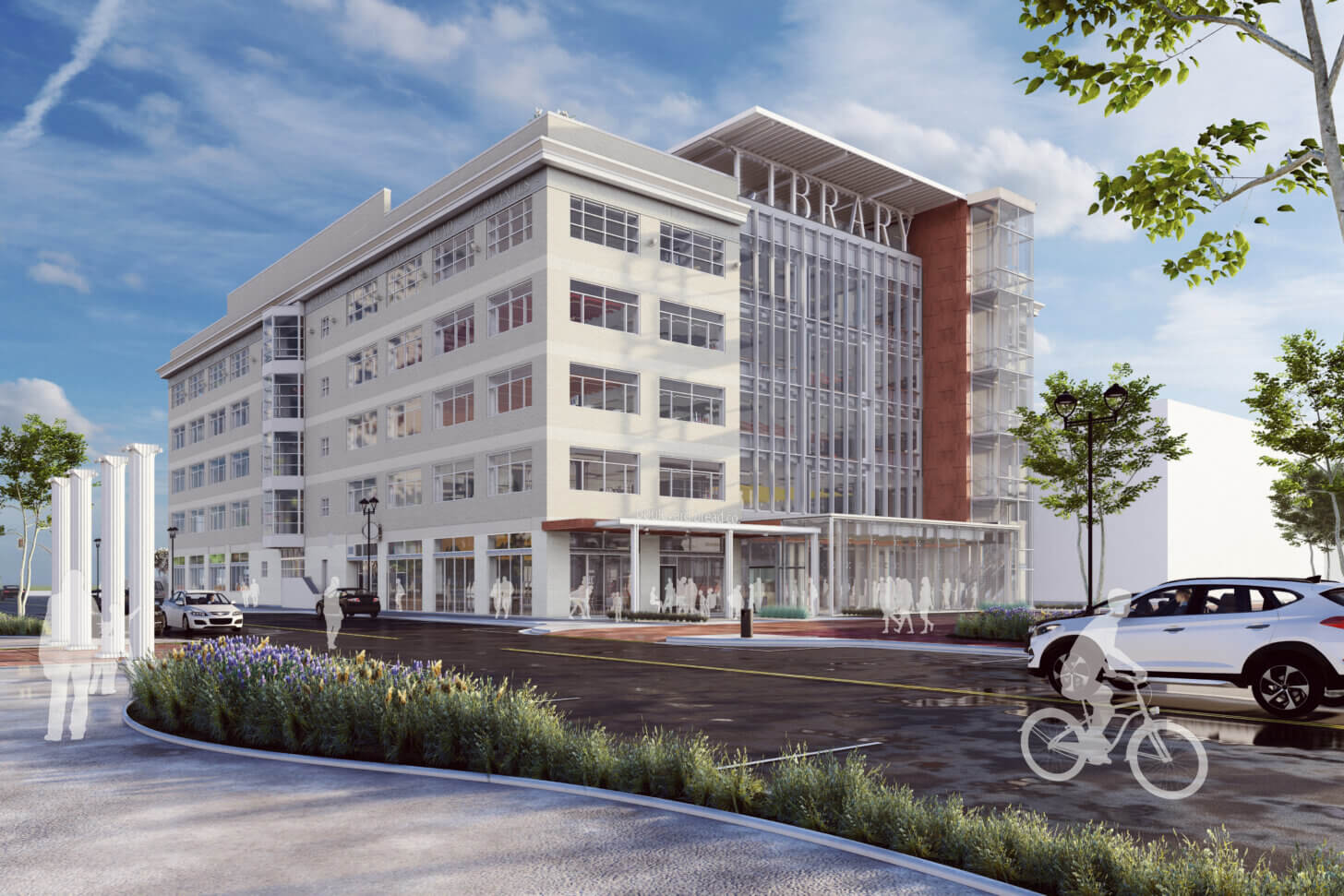
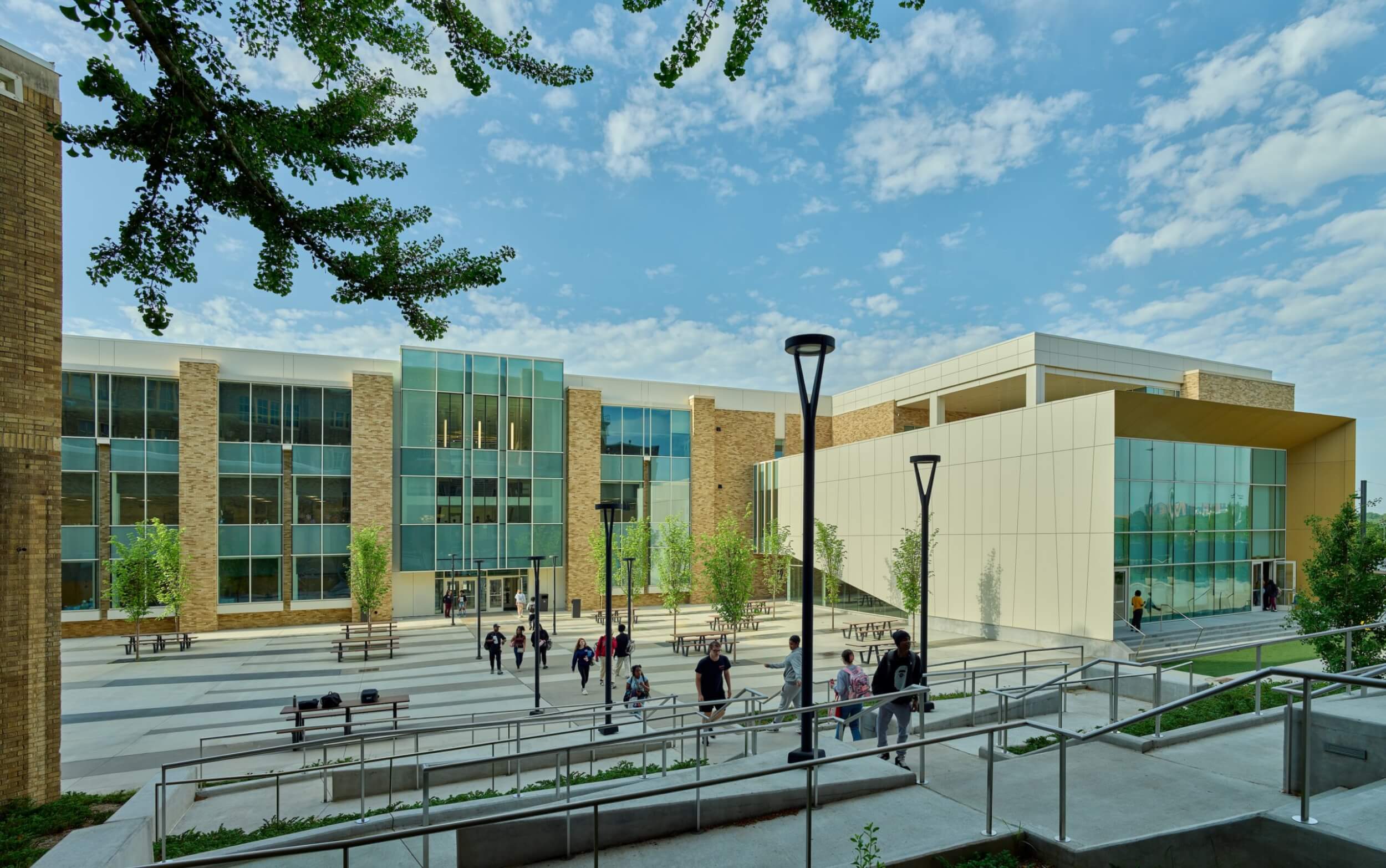
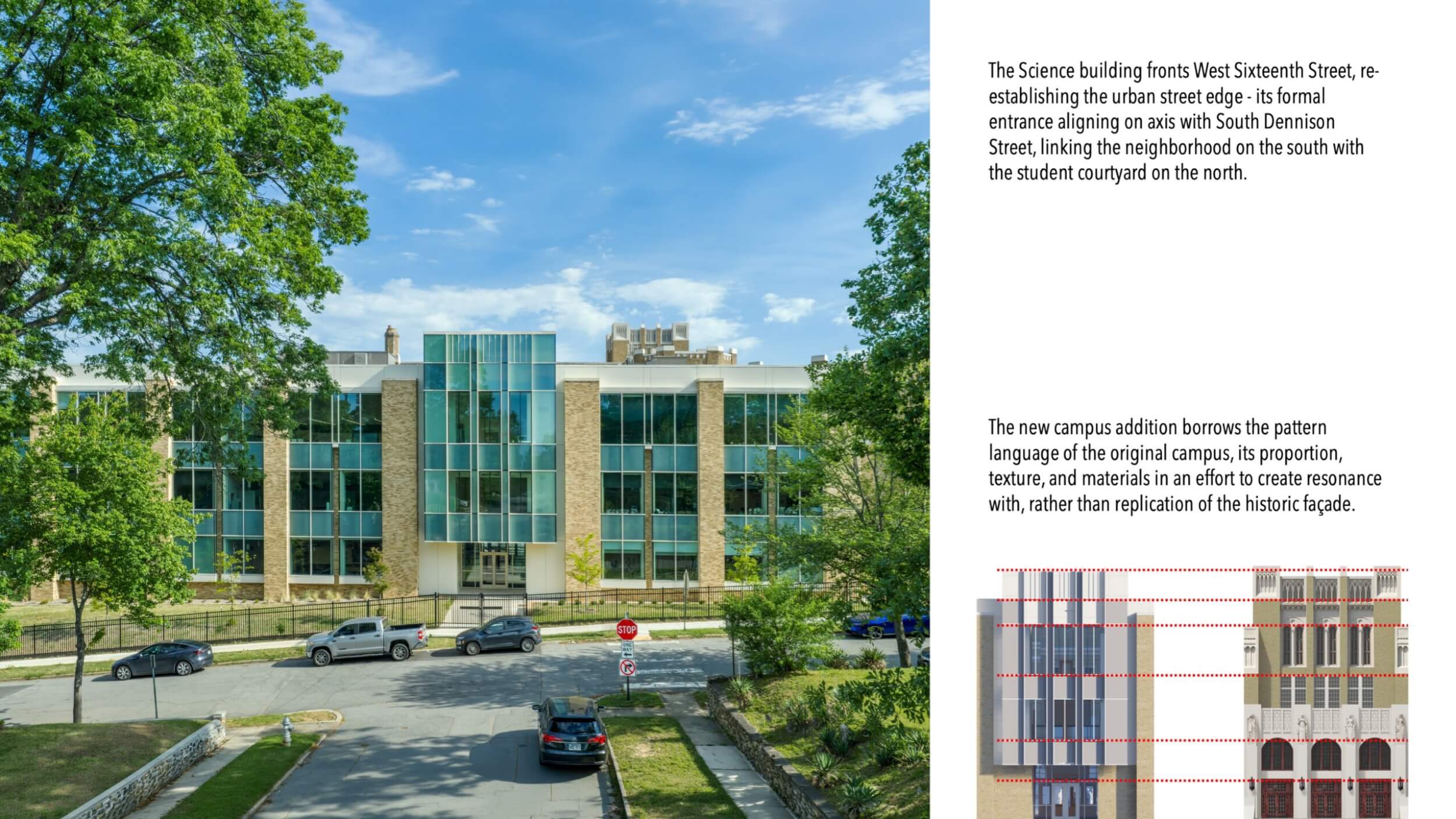
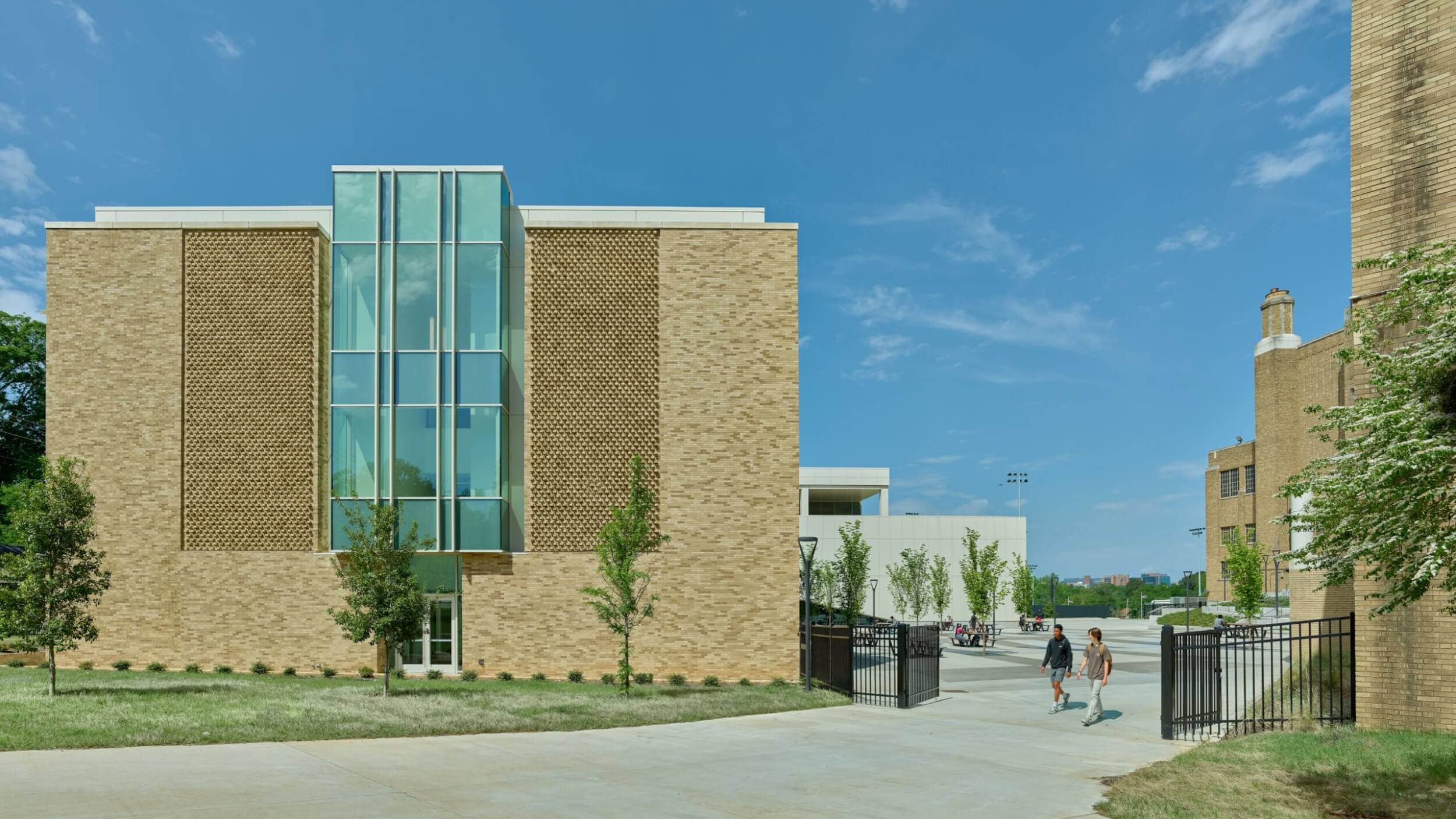
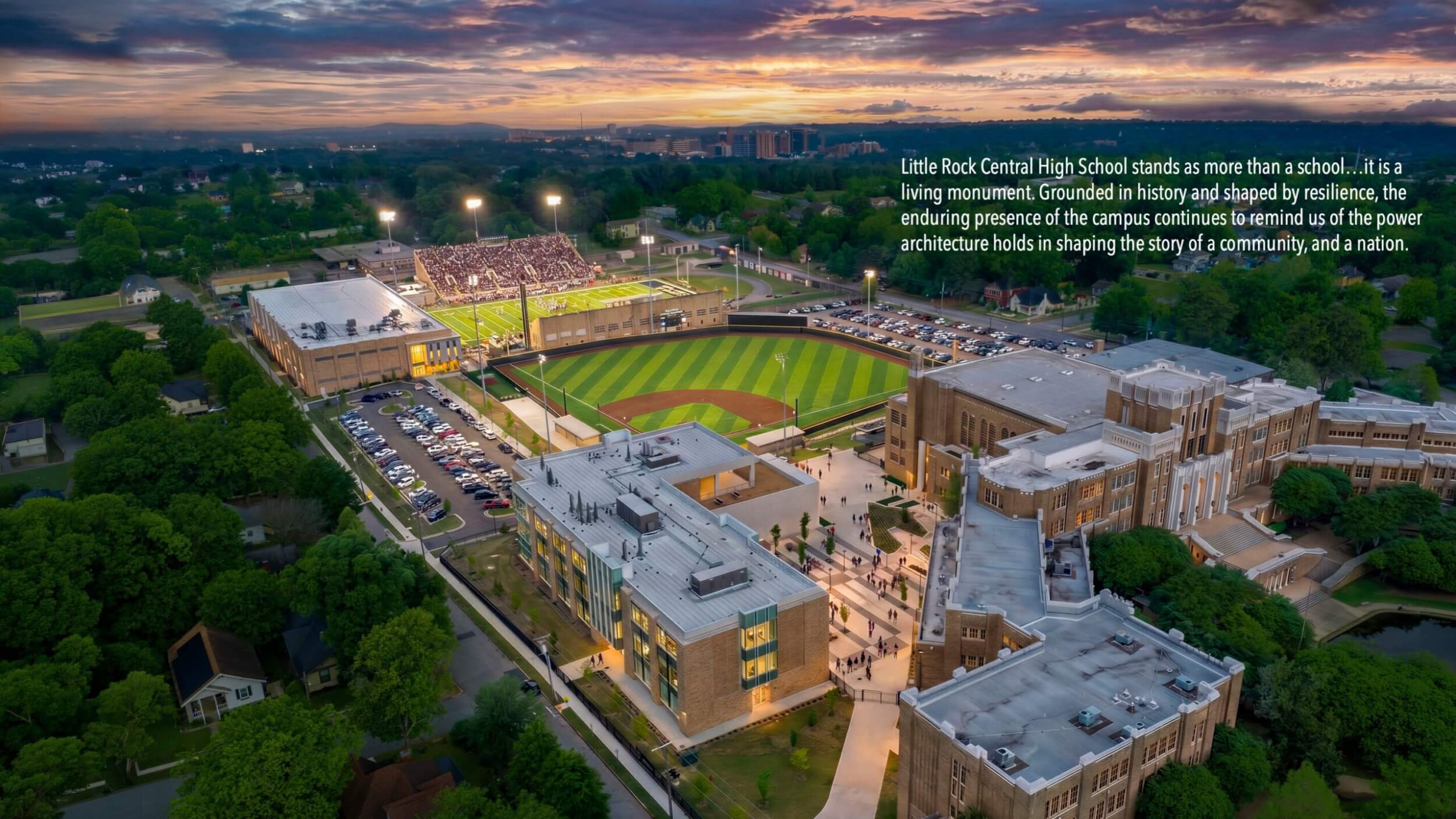
The project is designed with a strong emphasis on campus integration and contextual architecture. Campus planning strategies followed National Park Service guidelines on view preservation of the iconic front façade, resulting in placement of the additions behind the existing school, aligned along 16th Street, intentionally restoring the urban street edge. A more formal, traditional design language faces the historic neighborhood, while the campus facing facades embrace a more modern aesthetic. Architecturally, exterior materials, proportions, and detailing were carefully selected to relate to the historic limestone façade and Gothic-inspired character of the original school without direct replication. The resulting design strives to create a respectful dialogue between old and new — preserving the prominence of the historic building while allowing the additions to express their own modern educational aesthetic.
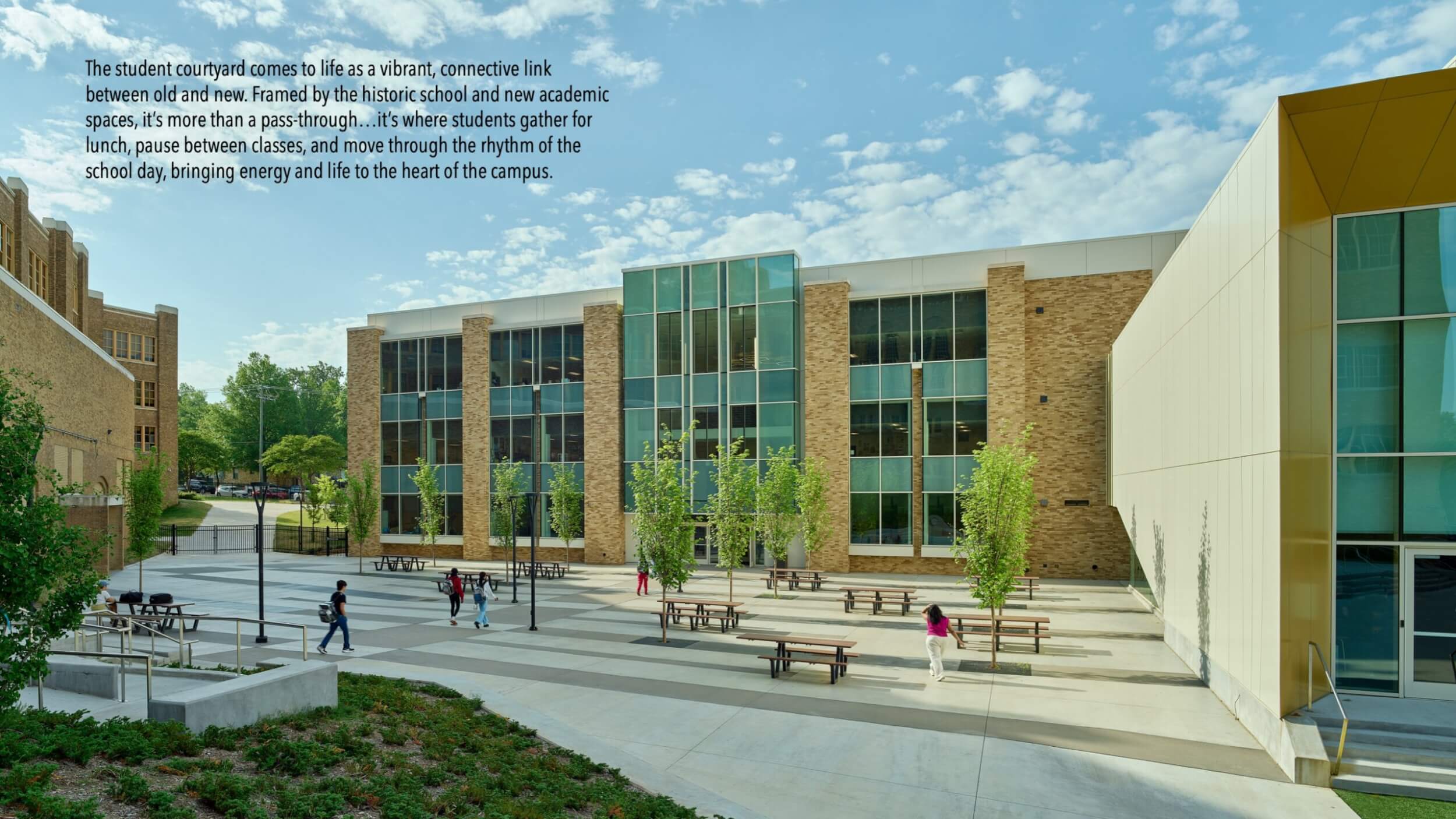
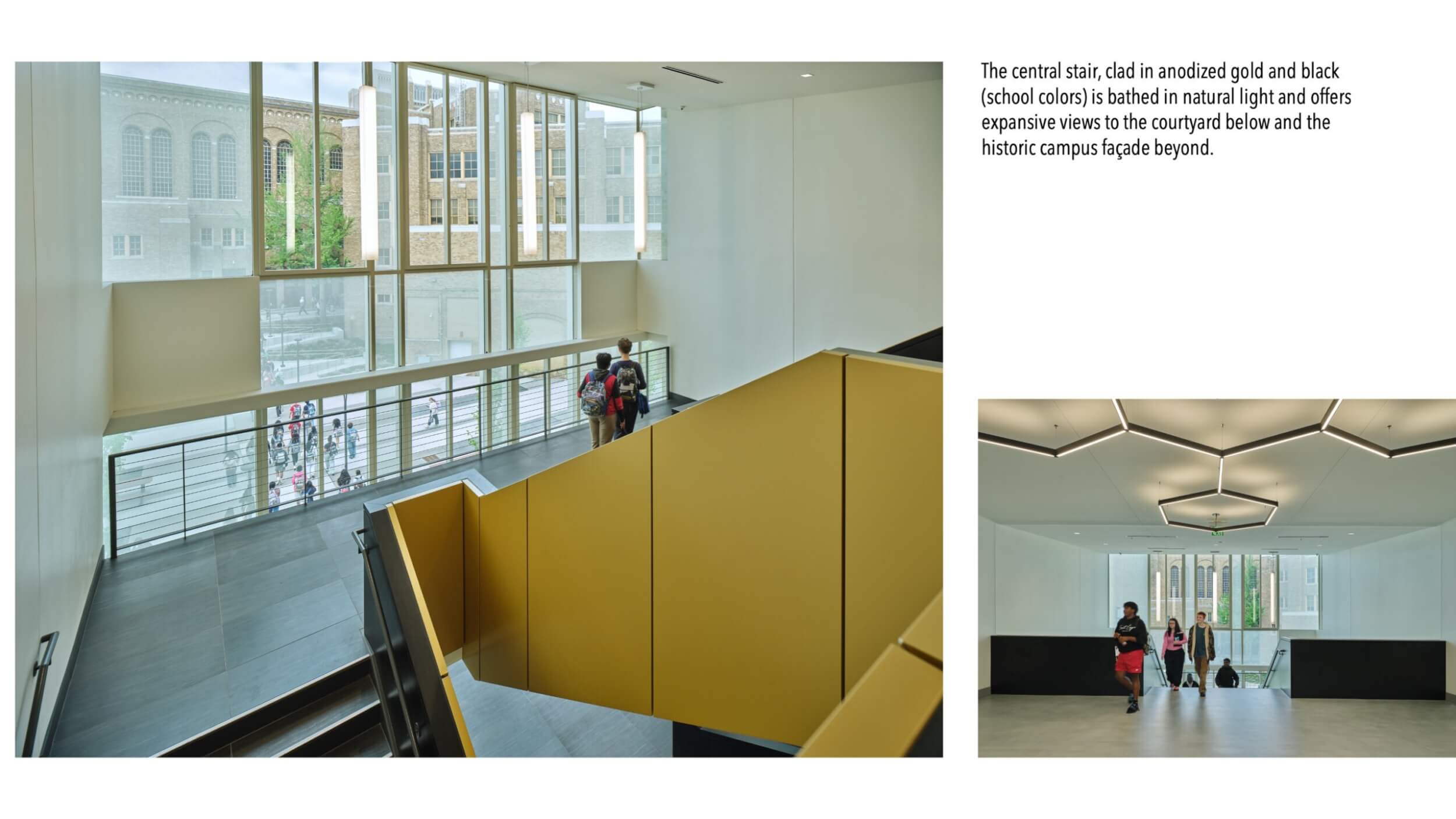
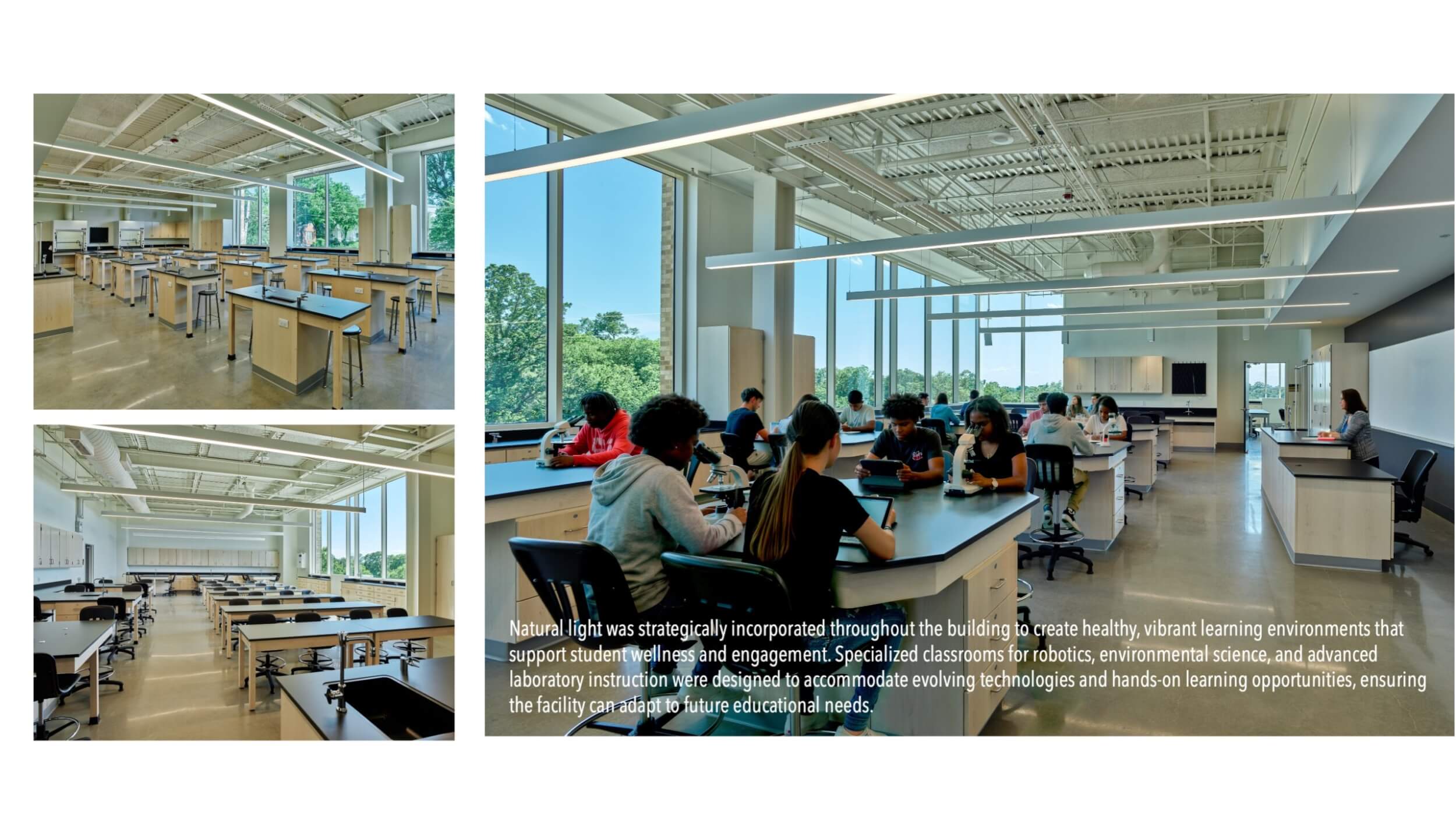
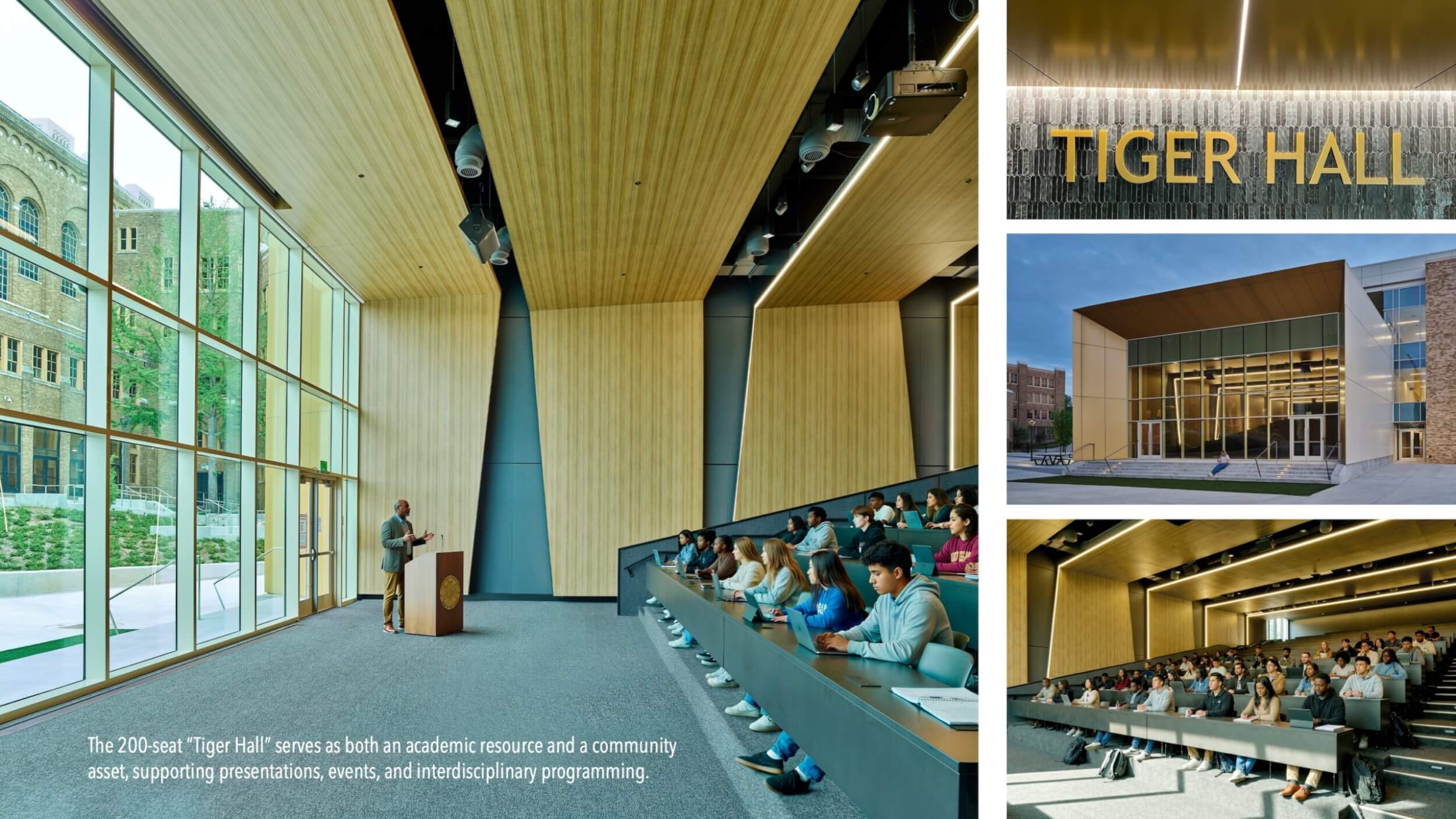
Inside the Science Building, the design prioritizes transparency, flexibility, and experiential learning. Open collaboration zones, glass-lined laboratories, classrooms, a 200-seat lecture hall, and interconnected learning spaces encourage visibility and interaction between students and faculty, reinforcing a culture of curiosity and innovation. Informal gathering areas, maker spaces, and the rooftop patio classroom provide opportunities for collaboration, experimentation, and social connection while strengthening the relationship between indoor and outdoor environments.
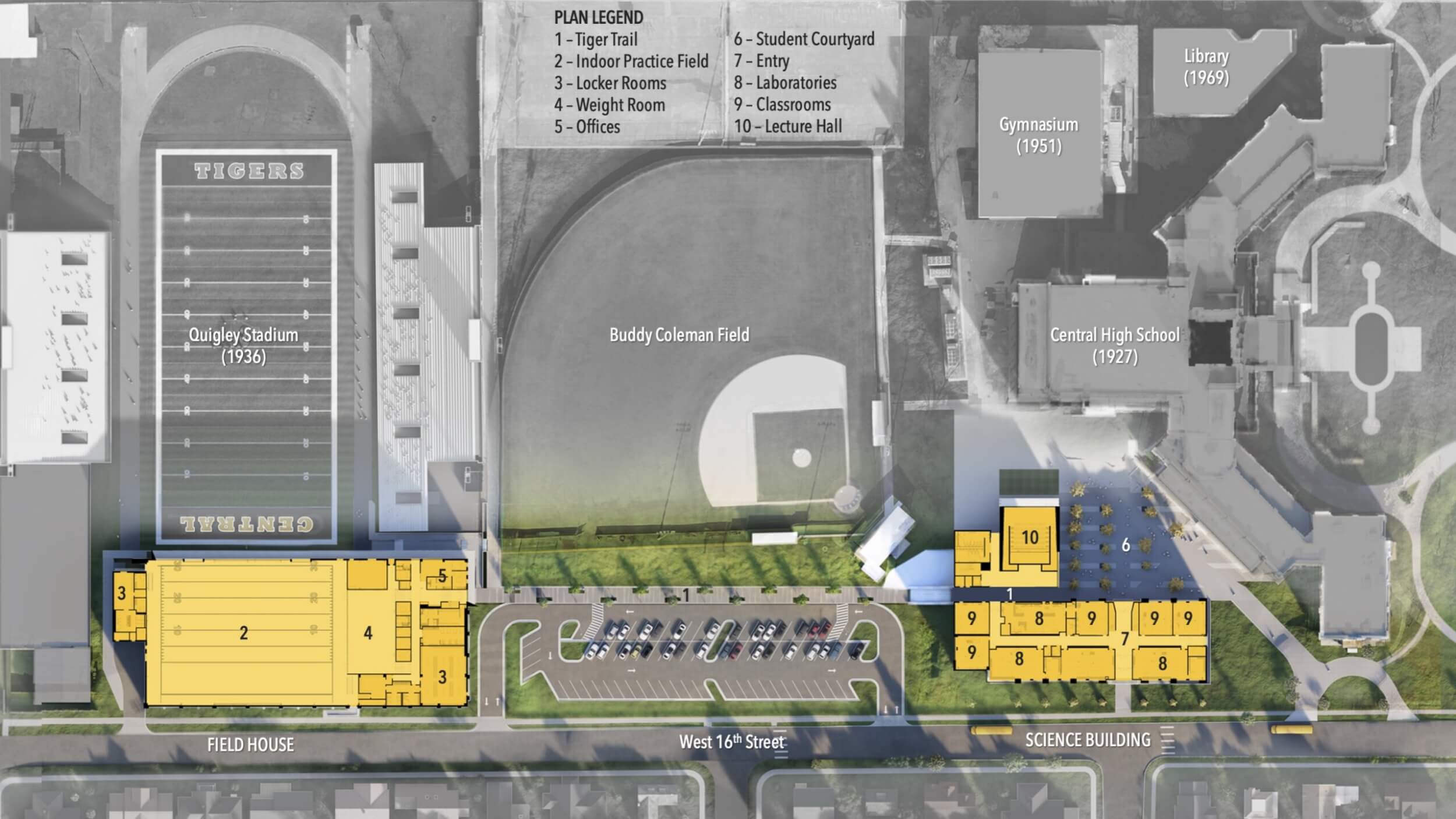
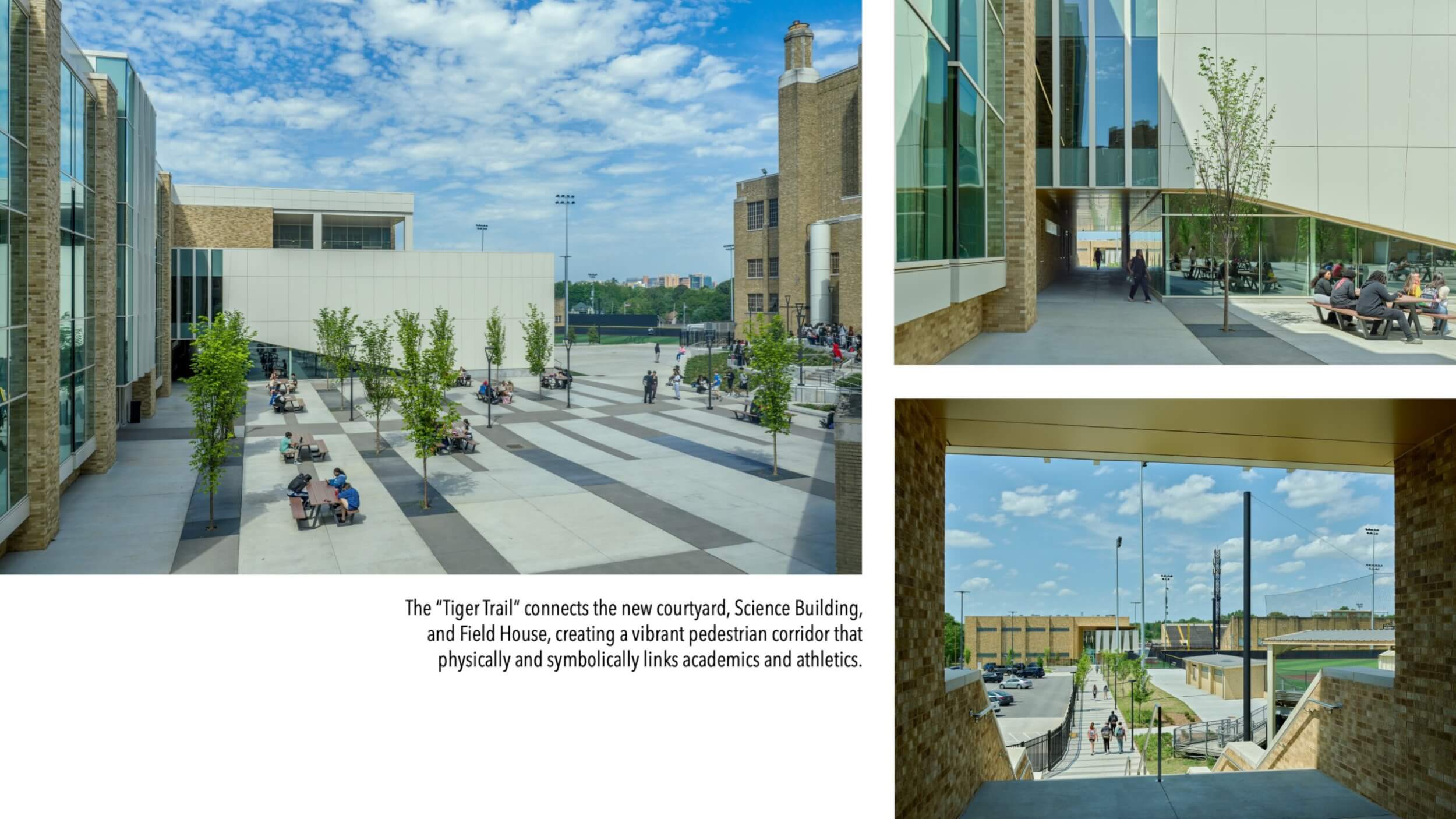
The “Tiger Trail” is a new east-west student pathway that connects the new courtyard, Science Building, and Field House, creating a vibrant pedestrian corridor that physically and symbolically links academics and athletics. The walkway’s change in texture and color embodies an abstracted “tiger stripe” pattern, which can also be found subtly integrated into building façade detailing.
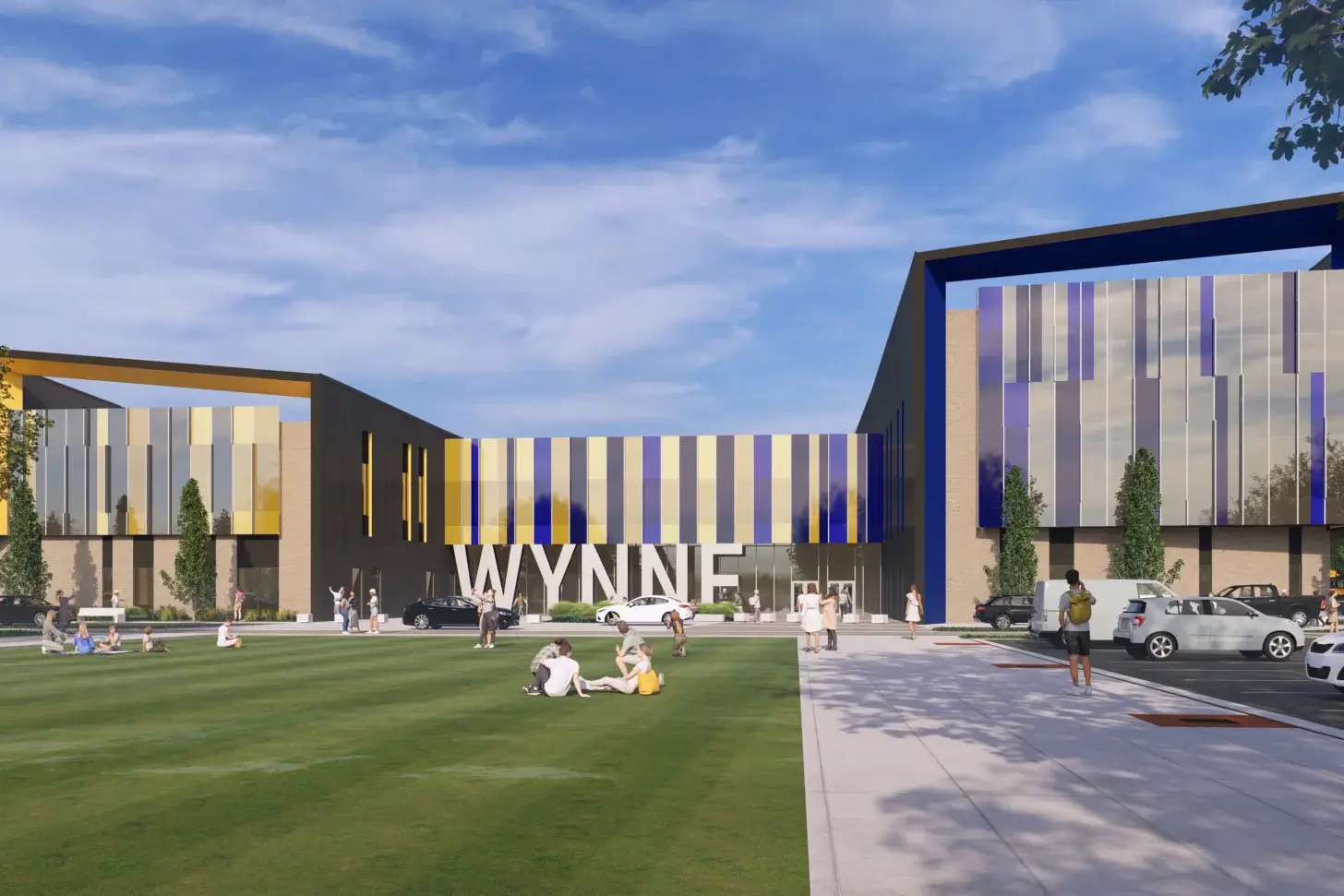
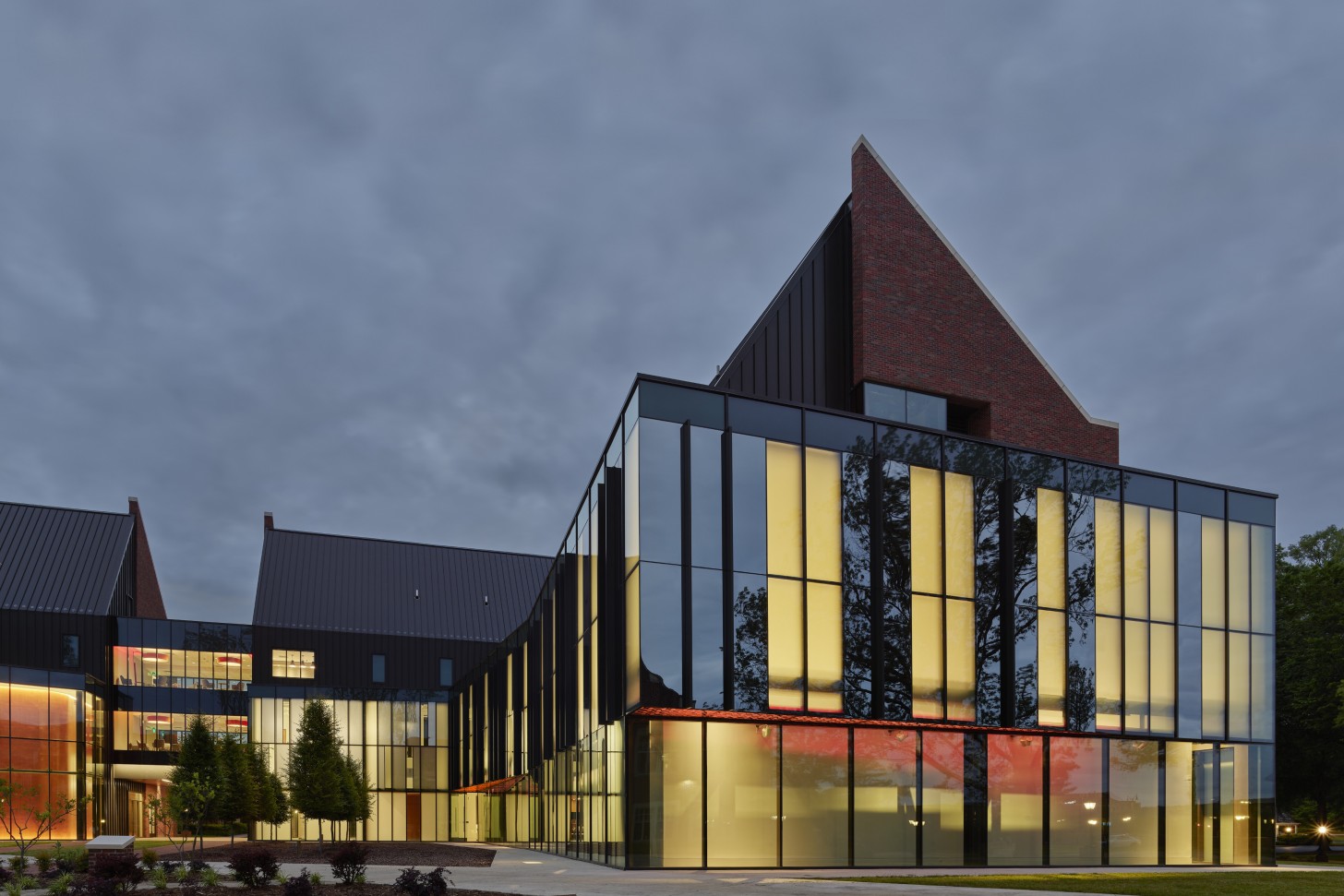
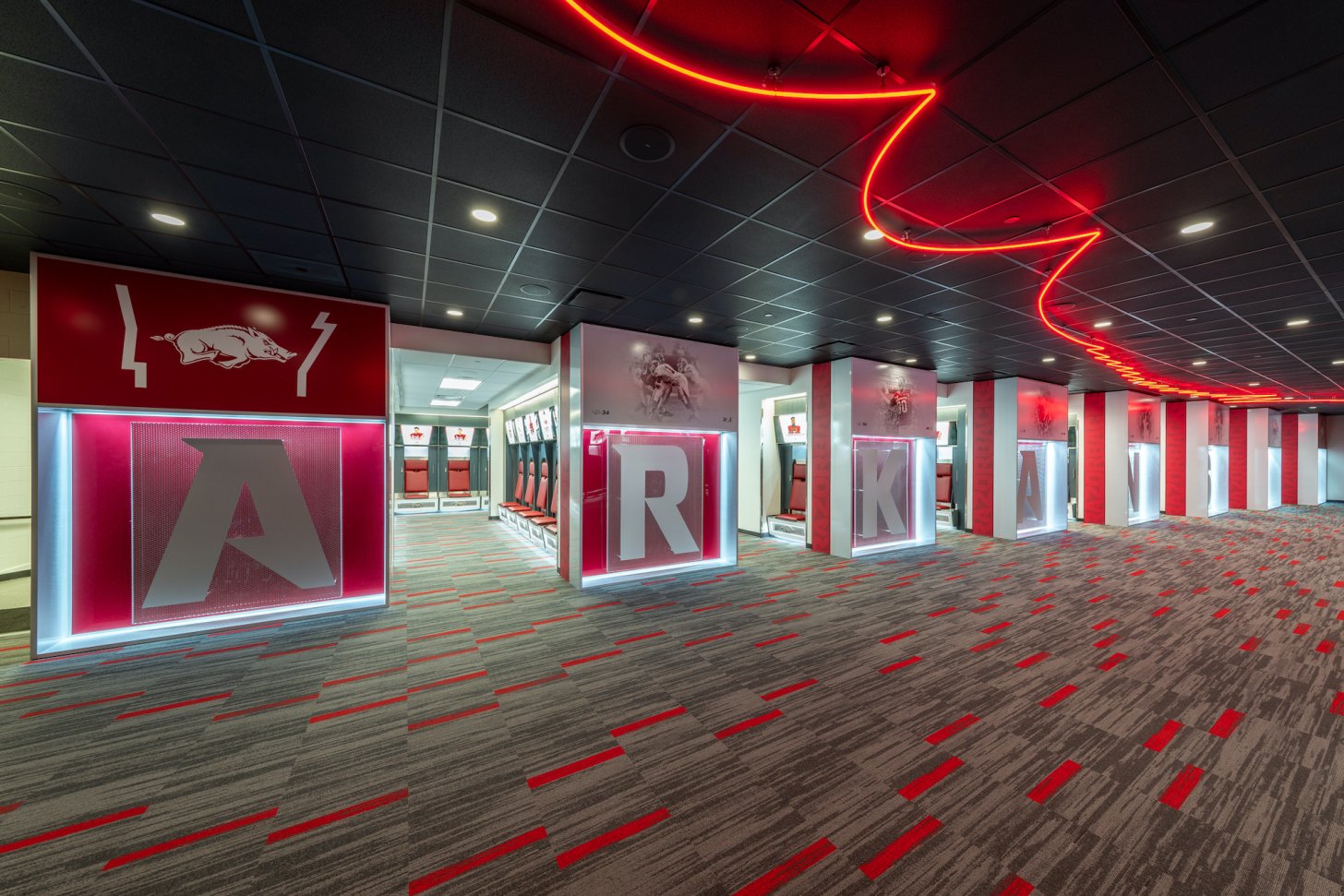
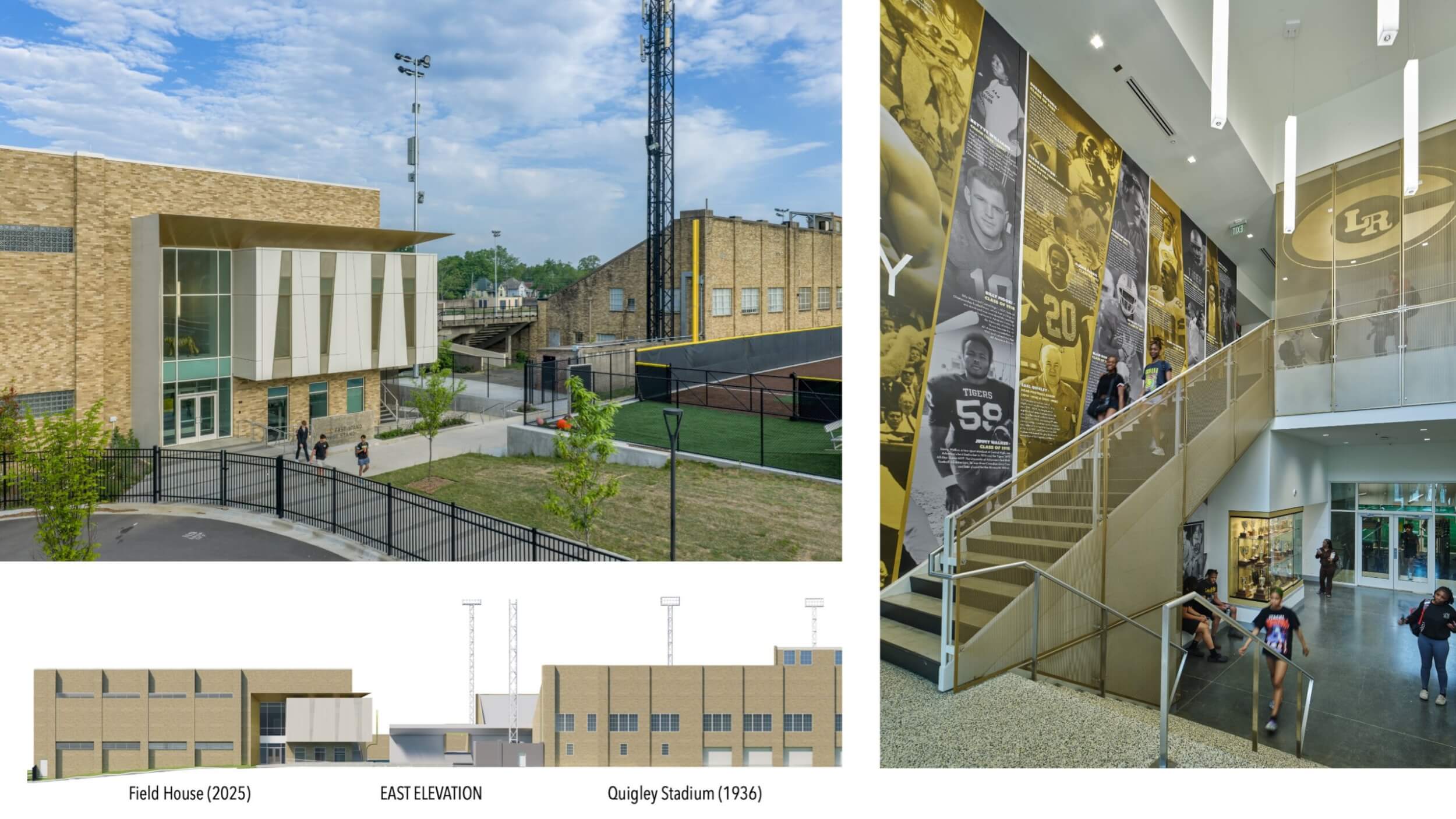
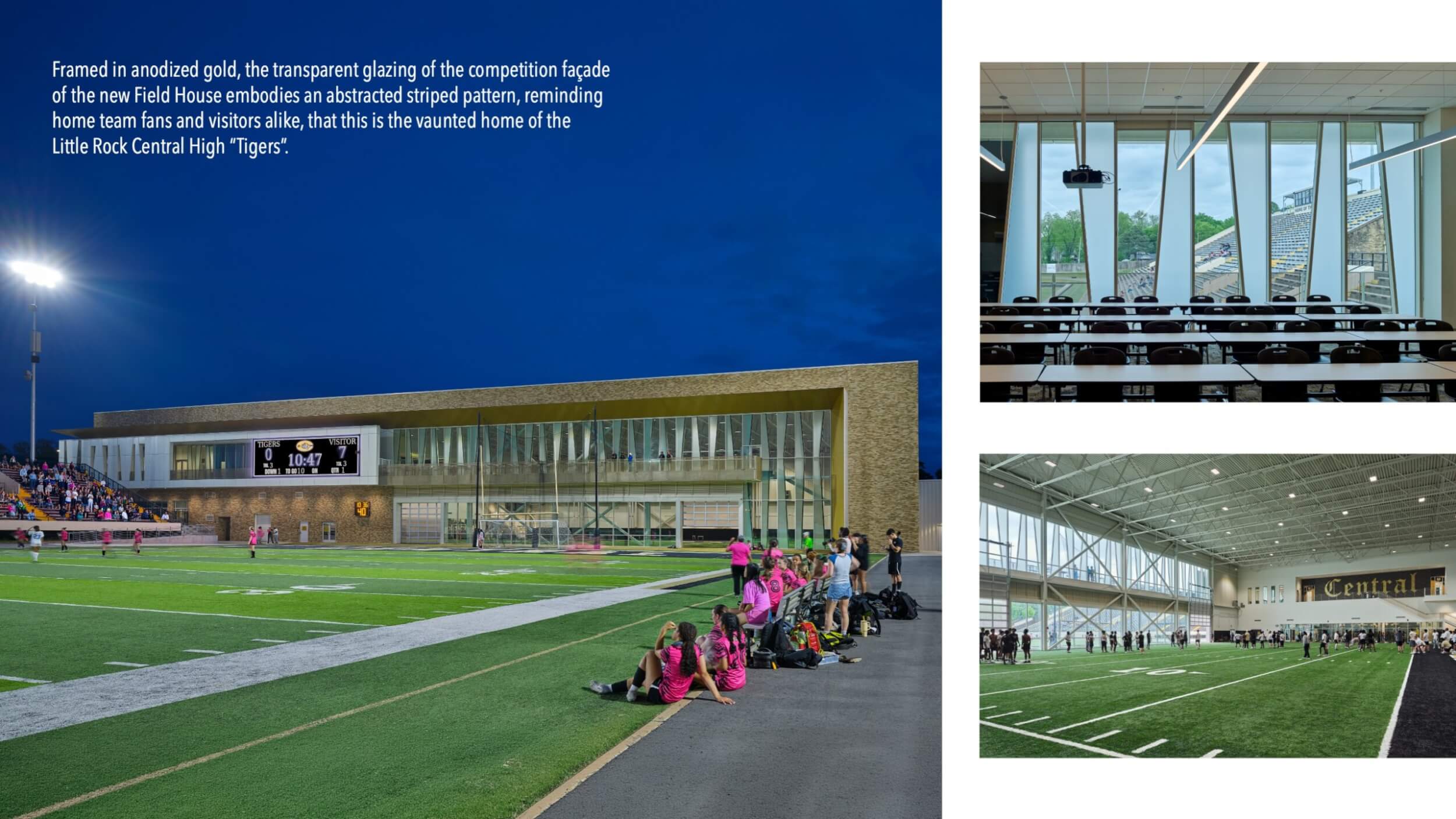
The Field House was designed to elevate the student-athlete experience while maintaining a cohesive relationship with the broader campus architecture. The facility combines strength and conditioning spaces, locker rooms, weight rooms, athletic offices, and a large indoor practice field into an efficient and highly functional layout that supports multiple athletic programs. Facing the neighborhood, the building’s more traditional south façade aligns with the urban edge on 16th Street. Fronting the athletic stadium, its modern and open north façade is more expressive; its abstracted tiger stripe glass façade encapsulated in a satin gold frame, emblematic of the school’s athletic colors and mascot.
Designed in full recognition of the historical and architectural significance of Little Rock Central High School – these new campus additions aspire to reinforce the school’s enduring role as a landmark of education, progress, civil rights, and community investment – providing the neighborhood, the campus, and its students with modern facilities commensurate with the school’s significant legacy of educational justice and academic excellence.